
Field Notes — 02 Jun 2026 — 5 MIN READ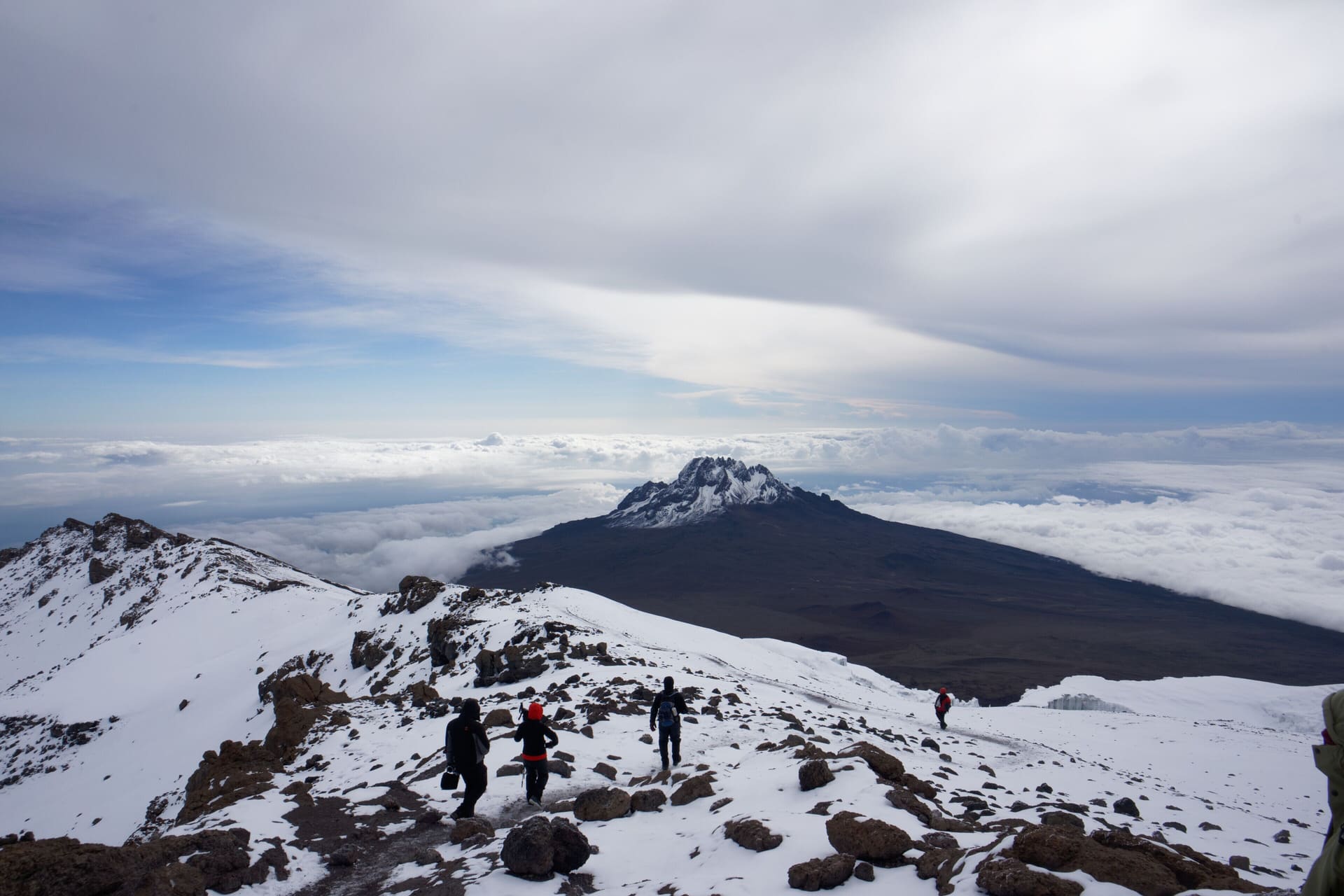
The quiet hours above Barafu
Summit night is a strange, beautiful sandwich: two hours of rock, six hours of darkness, and one hour of gold. A guide's notes from the switchbacks.
Midnight, Barafu Camp, 4,673 metres The kettle hisses at half past eleven and nobody says much. Tea, four ginger biscuits, and the slow cold business of putting on every layer you brought. At midnight the headlamps go up the ridge like a string of low stars, and the mountain becomes very simple.
The hours are not the same size Between midnight and Stella Point time stops behaving. There is the hour of scree switchbacks, counted in breaths rather than steps — pace, pace, pace. There is the hour of Hans Meyer's glacier, where the ice groans and your world is the width of a headlamp beam. The last hour before Stella is the longest object in the universe; I have watched a hundred people meet it, and I promise it ends.
Gold Stella Point, 5,756 metres, is where the sun usually catches you. The crater rim turns the colour of the inside of a guitar, and even the most exhausted guests start asking about cameras. From there it is forty gentle minutes along the rim — Rebmann glacier on your left, the Furtwängler snowfield silent on your right — to the sign.
I have stood on Uhuru Peak a hundred and forty-odd times. The view is astonishing. The better thing, though, is watching the guest in front of me understand what they just did.
Down is the professional half Everyone thinks the summit is the day. It is not — accidents happen on descent, tired legs and thick air. We police the down-walk like hawks, cane in hand (metaphorically), water forced at every stop. Mweka Camp is oxygen-rich and delicious, and the crew will have mangoes waiting.
summit nightguidesmachame