The Ultimate Wild Kingdom
Six days across Tarangire, the Serengeti, seasonal Ndutu and the Ngorongoro Crater — Northern Tanzania at its most complete.
Six days is the threshold at which a Northern Tanzania safari stops being a highlight reel and becomes a journey. The Ultimate Wild Kingdom links four of the region's great arenas — Tarangire, the Serengeti, the Ndutu plains and the Ngorongoro Crater — into a single, unhurried route that begins in Moshi and returns there with the full sweep of the northern circuit behind you. You start among Tarangire's baobabs, where the Tarangire River draws some of Tanzania's largest elephant herds in the dry months and where the park's quiet tracks reward patience with fringe-eared oryx, gerenuk and the big cats that shadow the riverline. From there the road climbs through Maasai country and the Ngorongoro highlands before opening onto the Serengeti's short-grass plains — country that changes character with every hour, from granite kopjes to riverine woodland. The Serengeti deserves its full days. You will game drive the Seronera valley at first light, when leopard are most often seen draped in the sausage trees and lion prides return from the night's hunt; your guide reads the grass, the wind and the radio network to position the vehicle where wildlife viewing may include cheetah on the plains, herds of resident wildebeest and zebra, and — depending on seasonal wildlife movements — the great migratory columns themselves. In January to March the route turns south to Ndutu, where the calving season gathers hundreds of thousands of wildebeest onto the short-grass plains and the predators follow. Outside those months, your guide will adapt the route according to current conditions, trading the southern plains for additional time in the central or western Serengeti so the safari always follows the wildlife rather than the calendar. The journey closes in the Ngorongoro Crater, descending at dawn into a self-contained ecosystem where black rhino, flamingo-fringed lakes and some of Africa's densest predator populations share a floor you can cross in a morning. This safari suits travelers who want variety without haste: couples, photographers, families with older children, and anyone combining the trip with Kilimanjaro or Zanzibar. Accommodation is chosen from a hand-picked selection of lodges and tented camps according to availability and your preferred safari style — from classic tented camps under canvas to comfortable safari lodges.
- 01Four iconic arenas in one private journey: Tarangire, Serengeti, Ndutu and Ngorongoro
- 02Full game-drive days positioned by your guide around seasonal wildlife movements
- 03January–March departures follow the Ndutu calving plains when conditions allow
- 04Dawn descent into the Ngorongoro Crater before the day-visitors arrive
- 05Private 4x4 with roof hatch and a dedicated guide from Moshi to Moshi
How the days move.
Moshi → Tarangire National Park
Tarangire National Park
Your guide collects you from your Moshi hotel or Kilimanjaro International Airport after breakfast for the run south-west toward Tarangire, with the road descending from the mountain's green foothills into Maasai steppe and the first views of the Rift Valley escarpment. On arrival, the park announces itself immediately: giant baobabs marching across mustard-coloured plains and, in the dry months, elephant herds numbering in the hundreds coming down to drink along the Tarangire River. After a picnic lunch, the afternoon is spent on game drive along the river circuit, where wildlife viewing may include elephant, giraffe, buffalo, waterbuck and the lions Tarangire is quietly famous for; depending on the season, your guide may extend toward the silale swamp for resident wildlife. Sundowners are taken as the light turns the baobabs amber, then it is a short drive to your lodge or tented camp in the Tarangire or Manyara area for dinner and the first night of the safari, with the evening chorus of the bush for company.
L/D · Lodge or tented camp, Tarangire / Manyara area
Tarangire → Serengeti National Park
Serengeti National Park
After an early breakfast you leave Tarangire and climb toward the Ngorongoro highlands, the road rising through coffee country around Karatu and into Maasai pastures where cattle and wildlife share the grass. Skirting the crater highlands, the landscape shifts repeatedly — forested ridges, semi-arid plains, then the first long views across the Serengeti's short-grass plains as you pass through the Naabi Hill area and enter the national park proper. Game viewing begins along the way: the plains between the gate and the central Serengeti are themselves rich with resident wildlife, so lunch is often taken as a picnic while the vehicle is already in the middle of the action. By afternoon you reach the Seronera river valley, the park's big-cat heartland, where wildlife viewing may include lion prides on the kopjes, leopard in the sausage trees along the riverline and cheetah on the open plains. Your guide will adapt the route according to current conditions and the day's sightings before settling you into your camp in the central Serengeti for dinner and overnight.
B/L/D · Tented camp or lodge, central Serengeti
Full day in the Serengeti
Serengeti National Park
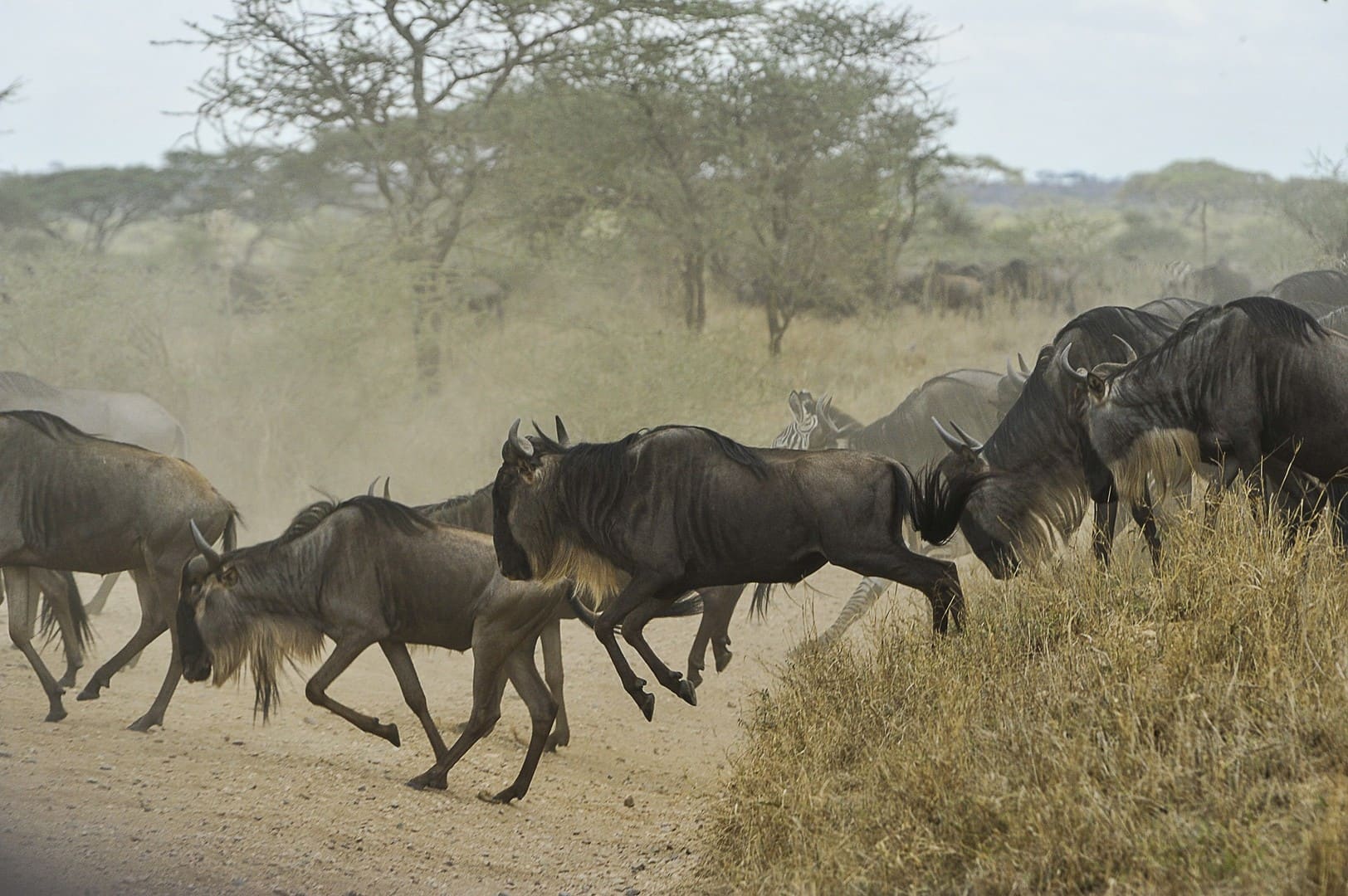
Today belongs entirely to the Serengeti. Departing at first light — the hour when predators are still active and the light is at its best — you spend the morning along the Seronera river lines and surrounding plains, with wildlife viewing that may include lion, leopard, cheetah, elephant, buffalo, giraffe and, in season, the great wildebeest and zebra herds whose location shifts with the rains. Breakfast can be a picnic taken in the bush at a scenic spot your guide chooses; the middle of the day is spent at a shaded stop with a proper lunch, following the rhythm of a full safari day rather than a transfer. The afternoon explores a different sector — kopjes, swamps or river courses — guided by the radio network and the day's movement of animals, and your guide will adapt the route according to current conditions, wildlife sightings and your own interests. Depending on seasonal wildlife movements, the focus may range from resident big cats to migratory columns stretching to the horizon. Return to camp for a hot shower, dinner and a second night in the central Serengeti.
B/L/D · Tented camp or lodge, central Serengeti
Serengeti → Ndutu / Southern Serengeti
Ndutu / Southern Serengeti
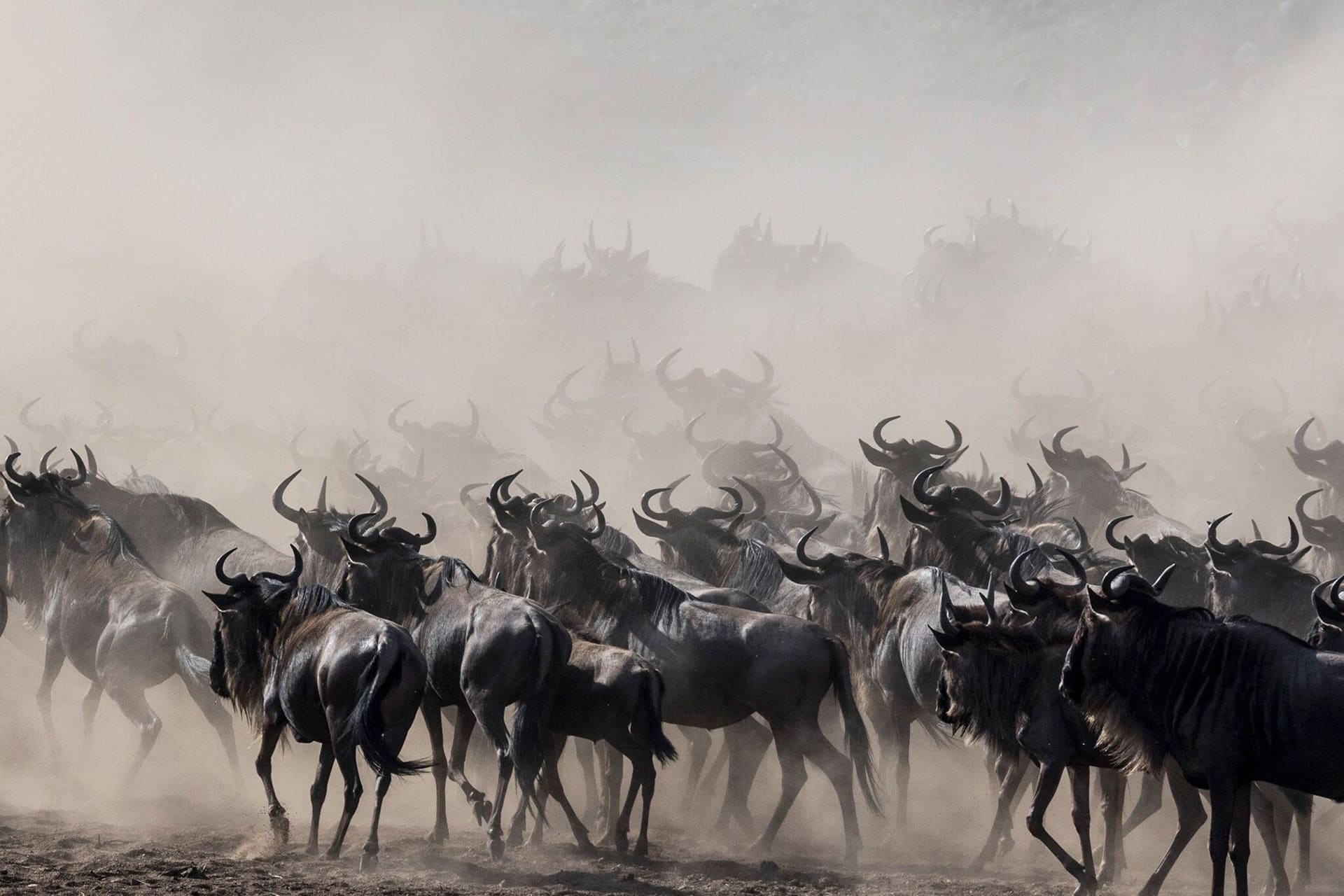
A morning game drive carries you south through the Serengeti's short-grass plains toward the Ndutu region, where the southern Serengeti ecosystem meets the Ngorongoro Conservation Area. Between January and March this is one of the great wildlife spectacles on earth: the calving season, when hundreds of thousands of wildebeest gather on the nutrient-rich plains and their newborn calves take their first unsteady hours among them — with opportunities to see lion, cheetah, hyena and jackal following the herds. Outside the calving window the plains transform into open grass and lakes country that still rewards exploration for resident wildlife, flamingo on the soda lakes and cheetah on the open ground, and your guide will adjust the day to where the game is, rather than where the map suggests it should be. After a picnic lunch on the plains, the afternoon is spent game driving the lakes and woodlands around Ndutu — Lake Masek, the marshes and the acacia woodlands — before dinner and overnight at a camp in the Ndutu / Southern Serengeti area.
B/L/D · Tented camp or lodge, Ndutu / Southern Serengeti
Ndutu → Ngorongoro Highlands
Ngorongoro Conservation Area
Your final morning on the plains is an early one: game drive as the sun rises over the short grass, when the light is low and the predators are finishing the night's business. Depending on the season this can be the trip's signature morning — newborn wildebeest, cheetah families on termite mounds, or simply the enormous quiet of the plains at first light. After brunch or a picnic breakfast, the route turns back toward the Ngorongoro highlands, the land rising steadily through acacia scrub into green, mist-cooled farmland around Karatu, where the scenery and the vegetation change almost by the kilometre. The afternoon is unhurried — time to visit a viewpoint over the Empakaai or Olmoti country if conditions allow, or simply to arrive early at your lodge on the crater rim or in the highlands and let the cool air be part of the experience. Dinner and overnight are taken near the Ngorongoro Conservation Area, positioned for tomorrow's dawn descent.
B/L/D · Lodge, Ngorongoro rim or Karatu highlands
Ngorongoro Crater → Moshi
Ngorongoro Conservation Area → Moshi
You descend the crater's inner wall at dawn, when the mist lifts off the floor and the day-visitors have not yet arrived — the best six hours of the entire safari for many guests. The caldera floor holds an extraordinary density of wildlife in a compact arena: open grassland, the Lerai forest, lakes fringed with flamingo and the permanent swamps where wildlife viewing may include black rhino, elephant bulls with impressive tusks, buffalo herds, hippo and the crater's famously large lion prides. A picnic lunch is taken at a designated site on the floor — often beside the hippo pool — before the track climbs back to the rim in the early afternoon. From there the road runs back through the highlands and Maasai country toward Moshi, arriving in the late afternoon or early evening, in good time for onward travel or a final night at your hotel. Your safari ends where it began, with Kilimanjaro — on clear days, standing over the road home.
B/L · —
FROM THE PLAIN
The safari in pictures.
Press any photo to open it full-screen.
THE FINE PRINT
What the price covers.
Clear terms, no surprises on the mountain or the plain — every trip is quoted privately, per departure.
In the price
- All park, conservation and crater service fees
- Private 4x4 safari vehicle with roof hatch and charging ports
- Dedicated professional safari guide throughout
- Full-board accommodation in carefully selected safari lodges and tented camps
- Unlimited mileage game drives in a private vehicle
- Bottled drinking water on game drives
- AMREF Flying Doctors evacuation cover while on safari
- All government taxes and VAT
Not included
- International flights and Tanzanian visas
- Travel insurance (mandatory for all guests)
- Gratuities for your guide and camp staff
- Premium brand drinks at lodges and camps
- Optional activities such as hot-air balloon flights and Maasai cultural visits
- Items of a personal nature
Before you ask.
Will we see the Great Migration herds?+
The migration is a moving season, not a fixed location. January–March is generally associated with the Southern Serengeti and Ndutu calving season, and June–October with the western and northern Serengeti, but exact wildlife locations vary with seasonal conditions. Your guide tracks the herds daily and positions the safari accordingly — we never promise a crossing or a fixed sighting.
Where does the safari start and end?+
The route starts and ends in Moshi. Alternative drop-offs in Arusha or at Kilimanjaro International Airport, or another agreed location depending on your travel plans, can be arranged at no complication — just tell us your onward plans.
Which accommodation do you use?+
Accommodation will be selected according to availability and the guest's preferred safari style, from our short list of lodges and tented camps in each area. We confirm the named properties in your quote before anything is booked.