Wild Horizons
Four days across Tarangire, the Serengeti and Ngorongoro — the full circuit for travelers short on days, not on ambition.
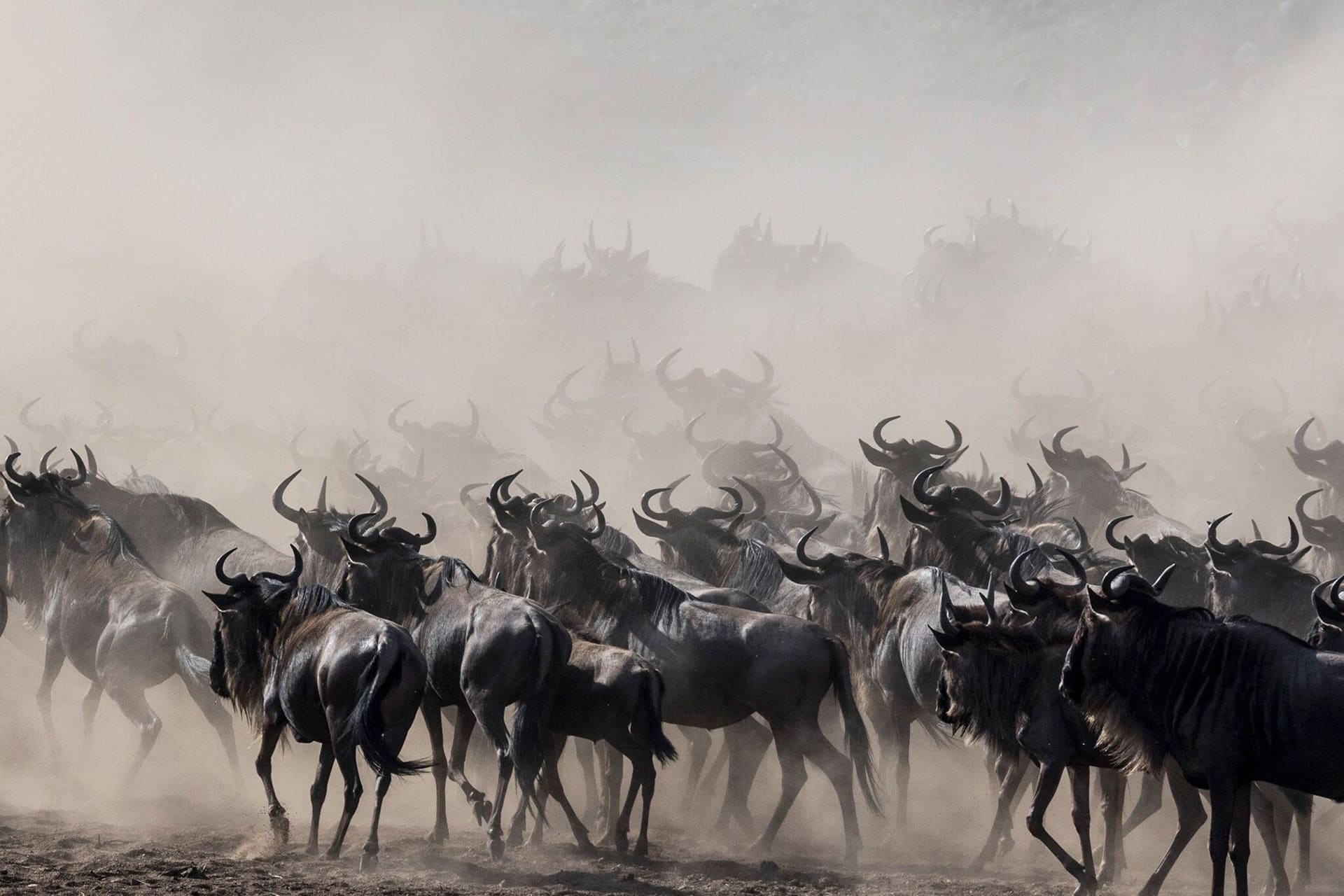
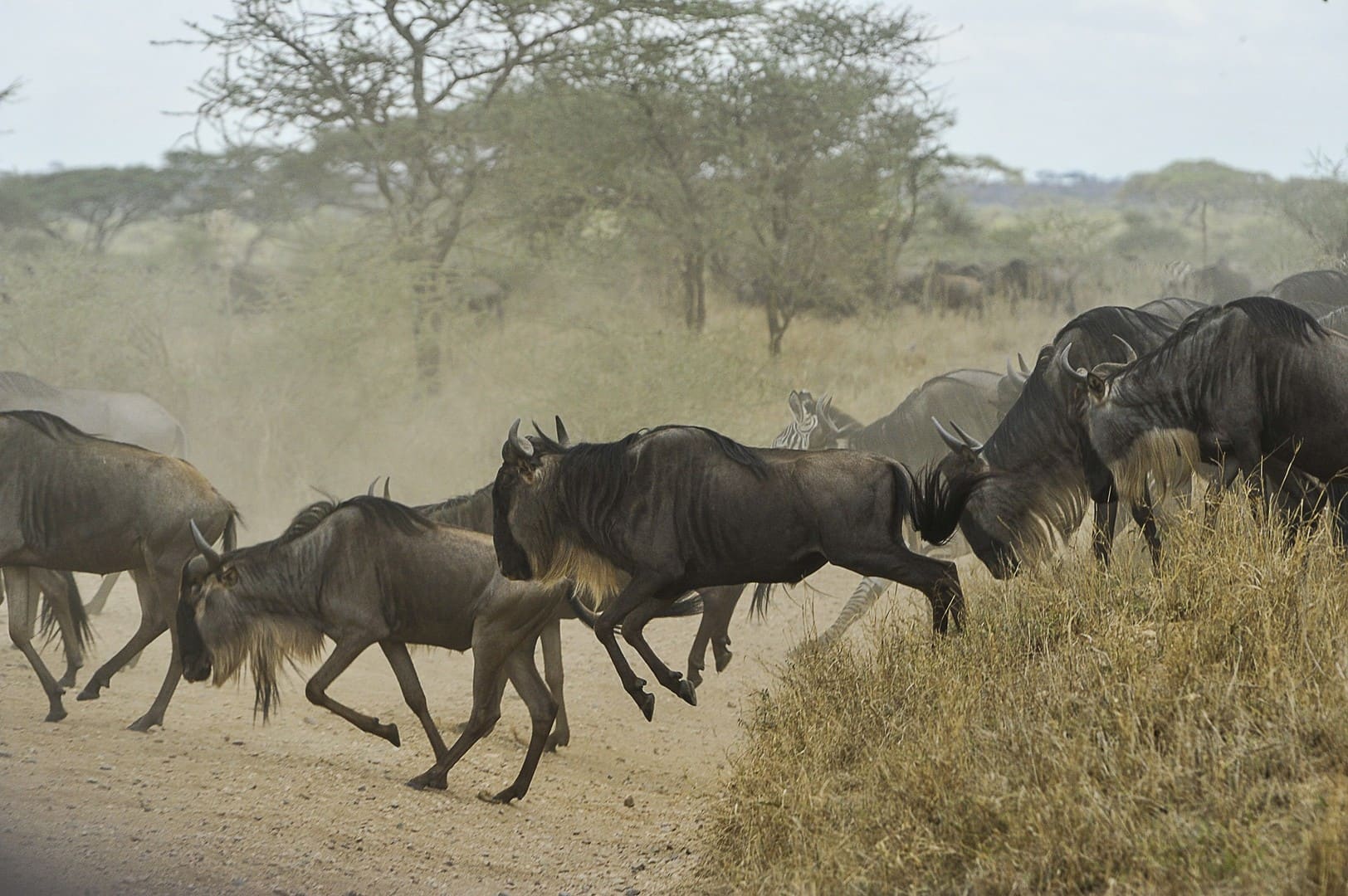
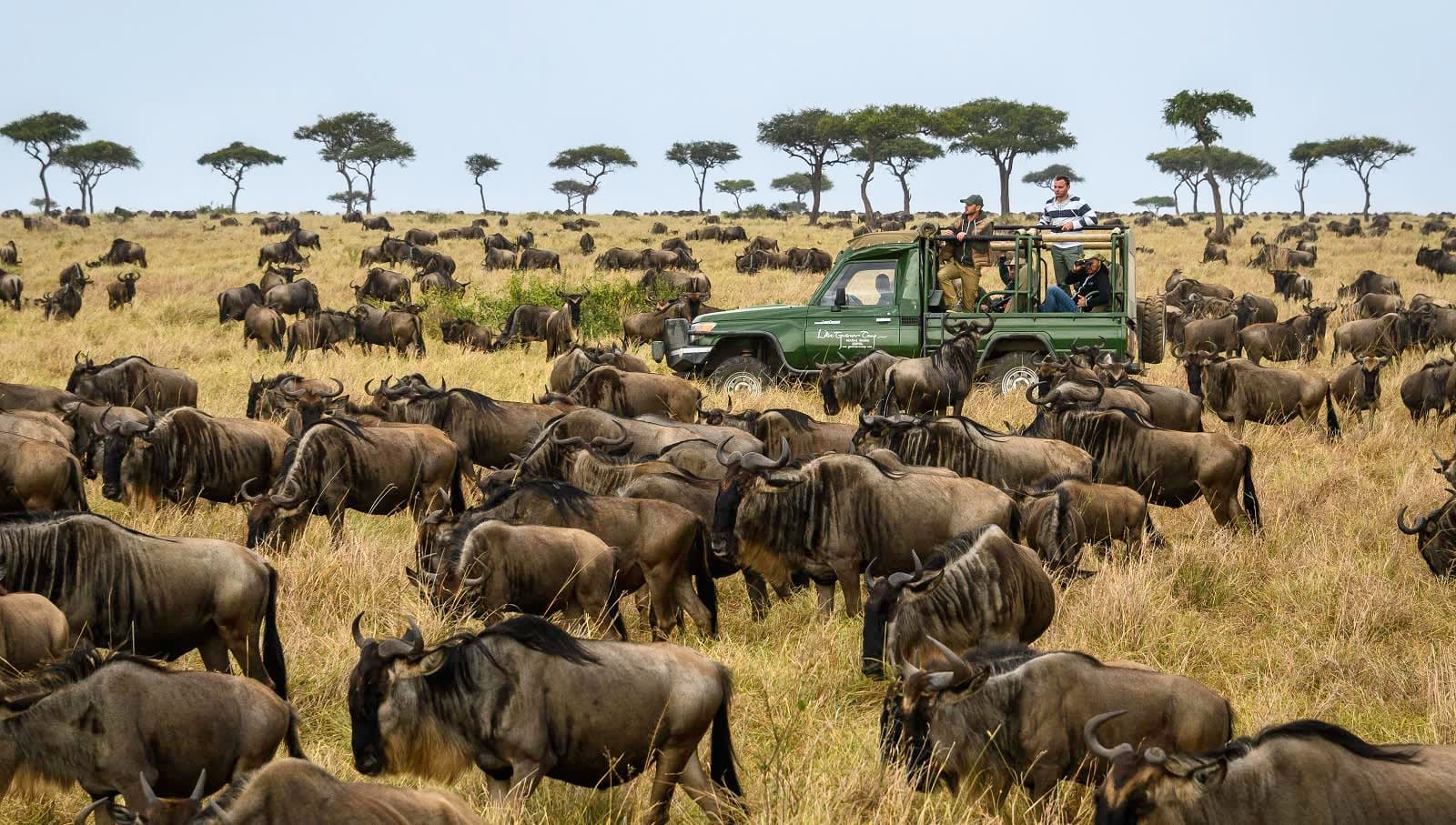
Four days is short only if you plan it badly. Wild Horizons compresses the classic Northern Tanzania circuit into one efficient, privately guided journey — Tarangire, the Serengeti and the Ngorongoro Crater — without the fixed groups, rushed checklists or shared vehicles that usually come with the timeframe. The safari opens with an afternoon in Tarangire, where the river draws large elephant herds in the dry months and the baobab-studded hills deliver an immediate, cinematic first drive. From there the route climbs through the Ngorongoro highlands and out onto the Serengeti's plains, where a night and a full game-drive day in the central Serengeti buy you the Seronera valley's big-cat country at its best hours: dawn along the riverlines, midday in the shade of the kopjes, and the long golden light of late afternoon. Wildlife viewing may include lion prides, leopard in the sausage trees, cheetah on the open grass, elephant, giraffe and — depending on seasonal wildlife movements — migratory wildebeest and zebra passing through the area. The final day belongs to the Ngorongoro Crater: a dawn descent into the caldera for six hours on the floor, where black rhino, flamingo-fringed lakes, hippo pools and the crater's famously large lion prides share the same arena, before the road returns you to Moshi by evening. This safari suits travelers with limited vacation time who still want to experience both the Serengeti and Ngorongoro properly — visitors combining the trip with Kilimanjaro or Zanzibar, business travelers extending a stay, and anyone who would rather do the circuit well than approximate it. Your guide will adapt the route according to current conditions, the season and your interests, and accommodation will be selected according to availability and your preferred safari style. Every day is planned around the hours when the wildlife is most active, so the short format costs you very little in sightings.
- 01Tarangire, Serengeti and Ngorongoro in one efficient private itinerary
- 02A full game-drive day in the central Serengeti's big-cat country
- 03Dawn descent into the Ngorongoro Crater, six hours on the floor
- 04Private 4x4 and dedicated guide — no shared seats, no fixed routes
- 05Built for tight schedules: Kilimanjaro and Zanzibar combinations welcome
How the days move.
Moshi → Tarangire National Park
Tarangire National Park
Your guide collects you from your Moshi hotel or Kilimanjaro International Airport in the morning, and the road runs south-west through Maasai steppe toward Tarangire, arriving as the heat of midday begins to ease. A picnic lunch inside the park is followed by the first game drive of the safari along the river circuit, and Tarangire does not believe in slow openings: in the dry season the Tarangire River concentrates some of Tanzania's largest elephant herds, and the afternoon's wildlife viewing may include elephant families at close quarters, buffalo, giraffe, waterbuck and the lions for which the park is quietly renowned, all beneath the giant baobabs that give the landscape its silhouette. Your guide will adapt the route according to current conditions and the day's animal movements along the river. As the sun drops and the baobabs turn amber, you exit the park for your lodge or tented camp in the Tarangire / Manyara area, arriving for dinner and a first night on safari.
L/D · Lodge or tented camp, Tarangire / Manyara area
Tarangire → Serengeti National Park
Serengeti National Park
After an early breakfast you set off north for the Serengeti, the day becoming a journey through half of Northern Tanzania's landscapes: the Karatu coffee country, the Ngorongoro highlands' forests and Maasai pastures, then the long descent onto the short-grass plains where the Serengeti ecosystem begins. Game viewing starts from the moment you enter wildlife country — the plains around the Naabi area are themselves rich with resident herds — and a picnic lunch is taken en route, often within sight of wildlife rather than at a restaurant table. By mid-afternoon you are in the Seronera river valley of the central Serengeti, spending the rest of the day on its riverlines and kopjes, where wildlife viewing may include lion prides, leopard, cheetah, hippo, elephant and giraffe, with your guide adapting the route to the day's sightings and conditions. Arrive at your camp in the central Serengeti at dusk for dinner and overnight, ready for a full day in the park tomorrow.
B/L/D · Tented camp or lodge, central Serengeti
Full day Serengeti → Ngorongoro area
Serengeti → Ngorongoro Conservation Area
You have the whole morning in the Serengeti, and it is spent where the action is: an early game drive through the Seronera valley and surrounding plains, when the predators are still active and the light is at its best, with wildlife viewing that may include lion, leopard and cheetah alongside the plains' resident herds — and, depending on seasonal wildlife movements, migratory wildebeest and zebra within the area. After a picnic lunch the route turns south, game viewing continuing out of the park and across the short-grass plains toward the Ngorongoro Conservation Area, so the transfer itself remains part of the safari rather than a gap between parks. The road climbs into the green, cool highlands as the afternoon fades, and by early evening you settle into your lodge on the crater rim or in the Karatu highlands. Dinner and overnight are positioned for tomorrow's dawn descent — the crater rewards the early, and the early is what this day is building toward.
B/L/D · Lodge, Ngorongoro rim or Karatu highlands
Ngorongoro Crater → Moshi
Ngorongoro Conservation Area → Moshi
The final day begins at dawn, descending the crater's inner wall as the mist lifts off the floor — the hour when the caldera is quiet, the light is low and the wildlife is at its most active. Six hours of game driving follow on the crater floor, threading between open grassland, the Lerai forest, soda lakes fringed with flamingo and the permanent swamps, with wildlife viewing that may include black rhino, large elephant bulls, buffalo herds, hippo pools and the crater's famously large lion prides, all inside a natural amphitheatre 600 metres deep. A picnic lunch is taken at a designated site on the floor — often beside the hippo pool — before the track climbs back to the rim in the early afternoon. From there the road runs through the highlands and Maasai country back toward Moshi, arriving in the late afternoon or early evening in good time for onward flights or a hotel night. Four days, three parks, and the circuit properly done.
B/L · —
FROM THE PLAIN
The safari in pictures.
Press any photo to open it full-screen.
THE FINE PRINT
What the price covers.
Clear terms, no surprises on the mountain or the plain — every trip is quoted privately, per departure.
In the price
- All park, conservation and crater service fees
- Private 4x4 safari vehicle with roof hatch and charging ports
- Dedicated professional safari guide throughout
- Full-board accommodation in carefully selected safari lodges and tented camps
- Unlimited mileage game drives in a private vehicle
- Bottled drinking water on game drives
- AMREF Flying Doctors evacuation cover while on safari
- All government taxes and VAT
Not included
- International flights and Tanzanian visas
- Travel insurance (mandatory for all guests)
- Gratuities for your guide and camp staff
- Premium brand drinks at lodges and camps
- Optional activities such as hot-air balloon flights and Maasai cultural visits
- Items of a personal nature
Before you ask.
Is four days really enough?+
For a first look at the Northern Circuit, yes — the itinerary trades breadth for pace, with one night in the Serengeti and a full crater day. If you can add a day or two, the Serengeti repays it best; your guide will tell you honestly where the extra time would go.
Can this connect with a Kilimanjaro trek or Zanzibar?+
That is exactly what it is designed for. We can start the safari from your Moshi hotel the morning after your trek ends, and finish with a transfer to Kilimanjaro International Airport or an onward flight to Zanzibar — tell us your plans and we will sequence the days around them.
What will we see in each season?+
Wildlife viewing changes naturally with the seasons. The dry months concentrate game around water, the green months bring newborn animals and dramatic skies, and the migration's position shifts through the year — your guide will adapt the route according to current conditions whatever your dates.